






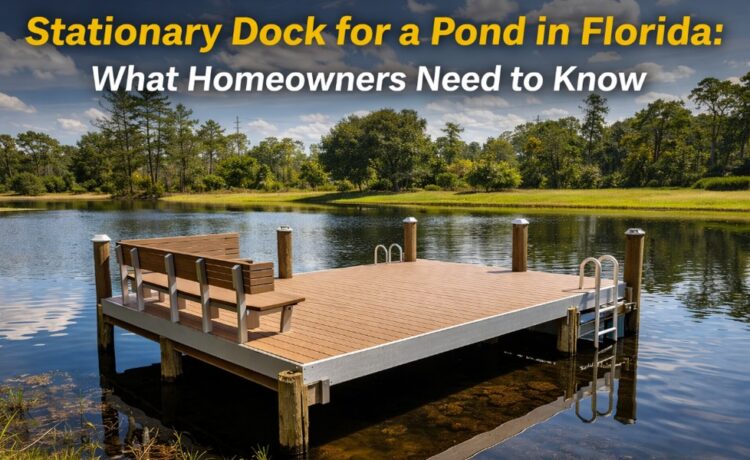
A stationary dock in Florida gives a waterfront property a strong, steady place to enjoy the water. It feels more like an outdoor patio than a floating platform. You can walk on it, sit on it, fish from it, or use it as a quiet place to relax near the water.
But Florida is hard on outdoor structures. Heat, humidity, heavy rain, sun, wind, and storm surge all affect how a dock performs over time. That is why building a stationary dock is not only about appearance. It is about using the right materials, setting a strong foundation, and planning for long-term value.
Key Takeaways
A stationary dock offers strong footing and does not move with each step.
The foundation matters most because pilings support the entire dock.
Marine-grade aluminum, composite decking, PVC, and hardwood are common material choices.
Florida docks need strong hardware because humidity and salt air wear down weaker metals.
Permits may be required, even for smaller private docks.
Good design helps the dock last longer and lowers future maintenance.
What Is a Stationary Dock?
A stationary dock is a fixed dock built above the water. Unlike a floating dock, it does not rise and fall with the water level. It is supported by pilings driven deep into the ground beneath the water.
This design gives the dock a firm and stable feel. When it is built correctly, it does not wobble much when someone walks across it. That makes it a good choice for families, guests, fishing, outdoor seating, and waterfront access.
A stationary dock works best in areas where water levels stay fairly steady. It is also a strong option for shallow ponds, lakes, and waterfront areas where a floating dock may sit too low during dry seasons.
Why Stationary Docks Work Well in Florida
Florida properties deal with water, heat, storms, and soft ground. A stationary dock is often chosen because it stays raised above the water and shoreline muck. This helps keep the walking surface cleaner and easier to use.
For shallow water, this matters a lot. A floating dock may rest in the mud when water levels drop. That can damage floats and make the dock harder to use. A stationary dock stays in place because its support comes from the pilings below, not from the water itself.
The biggest benefit is stability. A fixed dock feels solid underfoot. For homeowners who want a dock that feels permanent, this is often the main reason to choose this style.
Why the Foundation Matters
The strength of a stationary dock starts with the pilings. These are the vertical supports that carry the weight of the dock. They must be installed deep enough to reach a firm layer under the soft mud or sand.
In many Florida areas, the soil near water is not very stable. It may be soft, sandy, or muddy. If the pilings are not set correctly, the dock may lean, sink, or shift over time.
Some dock projects use treated wood pilings. Others use aluminum or other long-lasting materials. Wood has a classic look, but it needs more care in Florida’s wet climate. Aluminum is popular because it does not rot, stays straight, and handles moisture well.
A strong foundation helps the dock handle people, furniture, gear, and changing weather.
Choosing the Right Dock Frame
The frame is the skeleton of the dock. It connects the pilings and supports the decking above. If the frame is weak, the entire dock will feel weak.
Marine-grade aluminum is a common choice because it resists corrosion and does not warp like wood. It is also lighter, which helps during construction. Treated wood may still be used, but it usually needs more upkeep over time.
Spacing also matters. Joists should be close enough to keep the decking firm. If they are too far apart, the surface may feel soft or bouncy. This is especially important when using composite or PVC decking, since some materials expand or soften slightly in heat.
A straight, level frame makes the finished dock look cleaner and last longer.
Best Decking Materials for Florida
The decking is the part you walk on, so comfort matters. In Florida, it also needs to handle sun, rain, moisture, and bare feet.
Composite and PVC decking are popular because they resist rot and splinters. They are low-maintenance and often easier to clean than wood. Some modern boards are also designed to stay cooler underfoot, though any dock surface can get warm in direct sun.
Thru-flow panels are another option. These grated panels allow water and air to pass through. This helps reduce pressure during heavy rain or storm surge. They also allow sunlight to reach the water below, which may help protect the shoreline environment.
Hardwood is a high-end option. It looks natural and strong, but it costs more and needs regular care if you want to keep its rich color.
Hardware and Storm Planning
Florida docks need strong hardware. Regular screws and fasteners may rust quickly in humid or salty air. Stainless steel hardware is usually a better choice because it holds up longer and reduces rust stains.
Storm planning is also important. A dock should be built to resist uplift, not only weight from above. Rising water and wind can push upward on the dock. Good framing, strong bolts, and smart decking choices help reduce that risk.
Permits and Environmental Care
Before building, homeowners should check local permit rules. Many areas require approval for dock construction, even on private waterfront property. Rules may involve the county, local building office, environmental agency, or homeowners association.
It is also smart to protect the shoreline. Avoid removing too much native vegetation. Use safe materials near the water. Keep the dock design open enough for water flow and wildlife movement when possible.
Final Thoughts
Building a stationary dock in Florida is a long-term investment. The best dock is not only attractive. It is stable, safe, and built for the local weather.
Start with the site. Choose materials that match the water conditions. Use strong hardware. Plan for permits and maintenance before construction begins.
When done right, a stationary dock becomes one of the most useful parts of a waterfront property. It gives you a steady place to enjoy the water year after year.
This post was written by a professional at Supreme Marine Floating Docks. Supreme Marine Floating Docks is dedicated to providing top-quality floating dock for sale Palm Beach and marine accessories that combine durability, innovation, and superior performance. While we are a new brand, our team brings over 50 years of combined industry experience, making us a trusted name in the marine world. We are passionate about designing and delivering products that meet the highest standards, ensuring reliability and longevity in all marine environments. Whether for residential, commercial, or recreational use, our docks are crafted with precision and care, setting a new benchmark in the industry. At Supreme Marine, we don’t just build docks-we create lasting solutions
.