







Most plumbing disasters do not start with a burst pipe. They start with a slow drip behind a cabinet, a toilet that runs for a few seconds after flushing, or a water bill that creeps up for no clear reason. A short walk through your home every few months can catch these problems while they are still cheap. This guide takes you through the house one room at a time, and it also tells you when it is time to call a Florence plumber instead of picking up a wrench.
Start With the Whole House Meter Test
Before checking individual rooms, find out whether you have a leak at all. The U.S. Environmental Protection Agency suggests reading your water meter, then reading it again after two hours when no one has used any water. If the numbers changed, water is escaping somewhere.
The same agency notes that the average home loses more than 9,300 gallons a year to leaks, and about nine percent of homes leak 50 gallons or more per day. You can read its full list of detection tips on the EPA Fix a Leak page. A passing meter test is good news, but still worth following with the room checks below, since small surface leaks may be too slow to show up.
The Kitchen
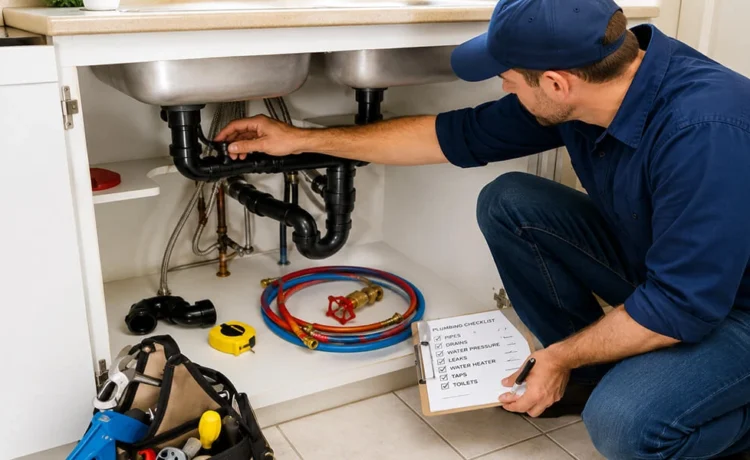
Open the cabinet under the sink and run your hand along the supply lines, shutoff valves and drain connections. Look for moisture, white mineral crust, rust on metal fittings or a warped cabinet floor. Run the faucet and the garbage disposal while you watch the pipes underneath.
If your dishwasher is nearby, check the floor around its base and the connection at the supply valve. Slow leaks here often rot cabinets and flooring long before anyone notices a puddle.
The Bathrooms
Bathrooms hold the most common leak sources in a house.
Toilets
The EPA recommends a simple dye test. Add a few drops of food coloring to the tank, wait about ten minutes without flushing, and see whether color appears in the bowl. If it does, the flapper is probably worn and leaking. Flappers should be replaced at least every five years, and the part is inexpensive. Flush right after the test to keep the dye from staining the tank.
Faucets and showerheads
A faucet dripping once per second can waste more than 3,000 gallons a year, according to the agency. A showerhead dripping ten times a minute can waste over 500 gallons. A worn washer or a loose connection is often the cause, and many fixes only need pipe tape or a replacement part. Shower valves that drip when the water is off are more complicated and are usually worth a professional’s time.
Around the tub and shower
Check the caulk and grout lines for gaps or soft spots, and look at the ceiling of the room below for stains. Water that escapes behind tile can run quietly for months.
The Laundry Area
Washing machine hoses are a classic failure point because they sit under constant pressure. Inspect both hoses for bulges, cracks or rust at the fittings, and make sure the machine is not pushed so tight against the wall that it kinks them. Rubber hoses age, so many homeowners replace them with braided steel versions every few years. Also check that the drain standpipe is secure and not overflowing.
The Water Heater
Look at the base of the tank for puddles or rust streaks, and examine the pipes and valves on top for moisture or mineral buildup. A tank that is leaking from the body, rather than from a fitting, usually means replacement is coming. Other signs of trouble include rumbling noises, discolored hot water and uneven temperatures. Water heater work involves gas, electricity or high heat, so it is wise to leave anything beyond a visual check to a licensed professional.
Outside the House
Check hose spigots for drips and look at the hose connection for a worn washer. If you have an irrigation system, run each zone and watch for soggy spots, geysers or sections that never seem to dry. The EPA points out that even a tiny sprinkler leak can waste thousands of gallons a month. In colder weather, make sure exposed pipes in garages, crawl spaces and outdoor walls are insulated, since North Alabama does get freezing nights.
When to Stop and Call a Professional
Some jobs are reasonable for a handy homeowner and others are not. Call a licensed plumber when you notice:
- A meter that keeps moving after you have repaired visible leaks
- Water stains on ceilings or walls with no obvious source
- Low water pressure throughout the house
- Repeated drain clogs or slow drains in several fixtures
- Any sewage smell or backup
- Rusty or discolored water from several taps
Shut off the main valve if water is actively flowing and you cannot stop it, and learn where that valve is before you need it.
A Fair Caution
A visual check cannot see inside walls, under slabs or inside old pipes. It is a way to spot trouble early, not a replacement for professional inspection, especially in an older home. When you do hire someone, ask for a written estimate, confirm their license and insurance, and get the scope of work in writing before they start.