






Replacing a cooling system west of Austin is rarely a simple swap of one box for another. Properties around Dripping Springs often sit on larger lots, where the outdoor unit may be a long way from the air handler. The homes themselves vary widely. There are limestone ranch houses with later additions, two-story builds with vaulted living rooms and west-facing glass, and solid older homes whose ductwork was sized for equipment installed decades ago. Each of those details shows up as a line on the final quote.
That is why two estimates for the same house can be thousands of dollars apart. One contractor may price only the equipment. Another may include a load calculation, duct corrections, electrical work and a thermostat that matches the system. Knowing where each dollar goes makes it easier to judge the biggest decision on the quote, which is how much efficiency to pay for.
Homeowners comparing bids for a Dripping Springs new ac installation can work with Air Comfort Systems, a family-owned Bryant Factory Authorized Dealer that has served the Hill Country since 2015. Its team handles:
- complete system replacements
- ductless mini-splits for additions, garages and rooms the central system never reaches
- duct repair or replacement when the existing runs can’t support new equipment
Replacement estimates are free, and financing is available with approved credit. Select high-end Bryant systems also carry extended labor warranty coverage of up to 10 years. Request an installation estimate before settling on an efficiency tier, so the price reflects your house rather than a catalog page.
The Line Items Behind a Typical Quote
The ranges below are general market figures for Central Texas, not any contractor’s pricing. A full replacement of a central AC with a furnace or heat pump commonly lands somewhere between about $7,000 and $15,000. Variable-speed systems and homes that need major duct work can go well beyond that.
| Cost item | What it covers | What pushes it higher or lower |
|---|---|---|
| Equipment | Outdoor condenser or heat pump, indoor coil, air handler or furnace | Capacity in tons, brand tier, single-stage vs. variable-speed compressor |
| SEER2 tier | Efficiency level above the federal minimum | Each step up adds cost; the savings depend on runtime and duct condition |
| Labor | Removal, setting equipment, brazing, charging, startup testing | Attic access, two-story layouts, crane or lift needs, tight closets |
| Refrigerant line set | Copper lines between the indoor and outdoor units | Long runs on larger lots, reusing vs. replacing old lines |
| Ductwork changes | Sealing, resizing, new returns, partial or full replacement | Duct age, attic routing, undersized returns, additions without ducts |
| Ductless zones | Mini-split heads and outdoor units for specific rooms | Number of zones, wall vs. ceiling cassettes, line length |
| Thermostat and controls | Programmable, smart or communicating thermostat | Whether the equipment needs a matched communicating control |
| Electrical and permits | Disconnect, breaker, wiring, panel capacity, inspection | Older panels, longer circuit runs, local permit rules |
Sizing and Efficiency Ratings
Load calculation. This is a room-by-room estimate of how much heat the house gains and loses, done with the ACCA Manual J method. A Department of Energy Building America fact sheet tells homeowners to insist on documented Manual J calculations. It also warns that correct sizing matters most in humid climates, where an oversized unit short cycles and struggles to control humidity. A calculation adds little to the quote and can bring the tonnage down, which lowers the equipment line.
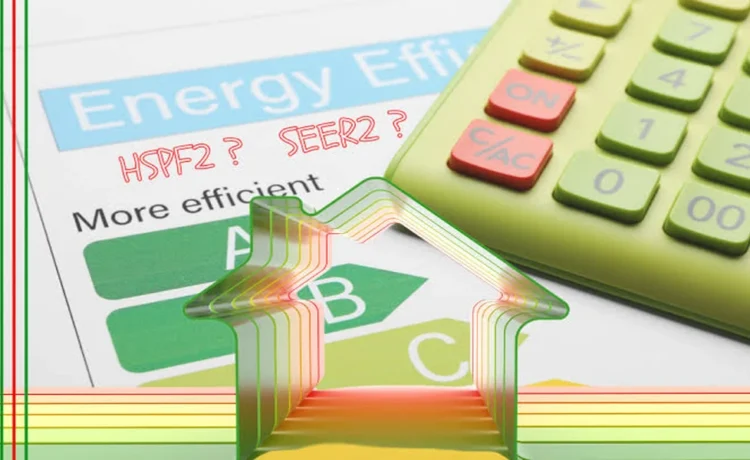
SEER2. This rating measures cooling efficiency across a season, using the test procedure that took effect in 2023. Texas falls in the federal South region. The Department of Energy’s 2023 standards FAQ explains that split-system air conditioners installed there must meet regional SEER2 and EER2 minimums, and that installing noncompliant equipment is illegal. For most residential split ACs, the floor is 14.3 SEER2. ENERGY STAR certification starts at 15.2 SEER2.
EER2. This rating measures efficiency at a single hot test condition. In a place where August afternoons sit near triple digits, it says a lot about how a system performs at peak. Two units with the same SEER2 can have different EER2 scores.
Compressor staging. Single-stage units run at full output or not at all. Two-stage and variable-speed units can run longer at lower output, which removes more moisture and holds temperatures more evenly. Higher SEER2 tiers usually come with this feature, so part of the extra cost buys comfort as well as lower electricity use.
Ductwork and Ductless Options
Duct condition. A premium condenser connected to leaky, undersized ducts cannot reach its rated efficiency. Older Hill Country homes often have flex duct in the attic that has sagged, collapsed or come loose. It is common for a quote to show duct work costing as much as the efficiency upgrade, and in many homes that money does more good.
Static pressure. This is the airflow resistance the blower has to push against. High static pressure, often caused by too few returns or restrictive filters, makes the blower work harder and wears it down faster. A good installer measures it before quoting new equipment.
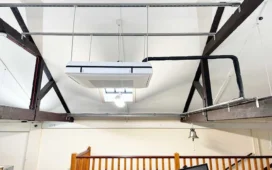
Ductless mini-splits. These systems send refrigerant straight to wall or ceiling heads, so they skip ducts entirely. They suit garage conversions, detached studios, primary suites added onto older homes, and upstairs rooms the central system can’t reach. Each zone adds cost. Even so, one mini-split head is often cheaper than extending ducts across a long attic.
Hybrid layouts. Many homes end up with a right-sized central system for the main living areas and one or two ductless zones for the problem rooms. That combination can let the central unit drop a size.
Installation Costs and Rebates
Electrical work. New equipment may need a new disconnect, a larger breaker or updated wiring. Older homes with full panels sometimes need a panel upgrade, which can add a few thousand dollars.
Permits and inspection. Requirements depend on whether the address is inside city limits or in unincorporated Hays County. A licensed contractor should know which rules apply and include any fees on the quote.
Federal tax credits. The IRS confirms that the Energy Efficient Home Improvement Credit applies only to qualifying improvements placed in service through December 31, 2025. Systems installed now no longer qualify. That removes one argument for paying more for a high-efficiency tier.
Utility rebates. Much of the Dripping Springs area is served by Pedernales Electric Cooperative rather than Austin Energy, and each utility runs its own program. Amounts and efficiency thresholds change from year to year, so check your bill to see which utility serves you and confirm the current terms before you count a rebate in your budget.
So does the higher SEER2 rating pay off? It can, in a house that runs its system hard for six months, with ducts that have been tested and sealed and equipment sized from a real load calculation. Without the federal credit, the case now depends mostly on runtime and comfort. In many older Hill Country homes, the best order is to spend first on sizing and ductwork, then pick the highest efficiency tier the budget still allows.